
Sauna

Originally published as ‘All the Women Now’ in Feminine Complexity: The Unlikeable Female Protagonist (Violet Zadoyan, ed.), 2025.
I
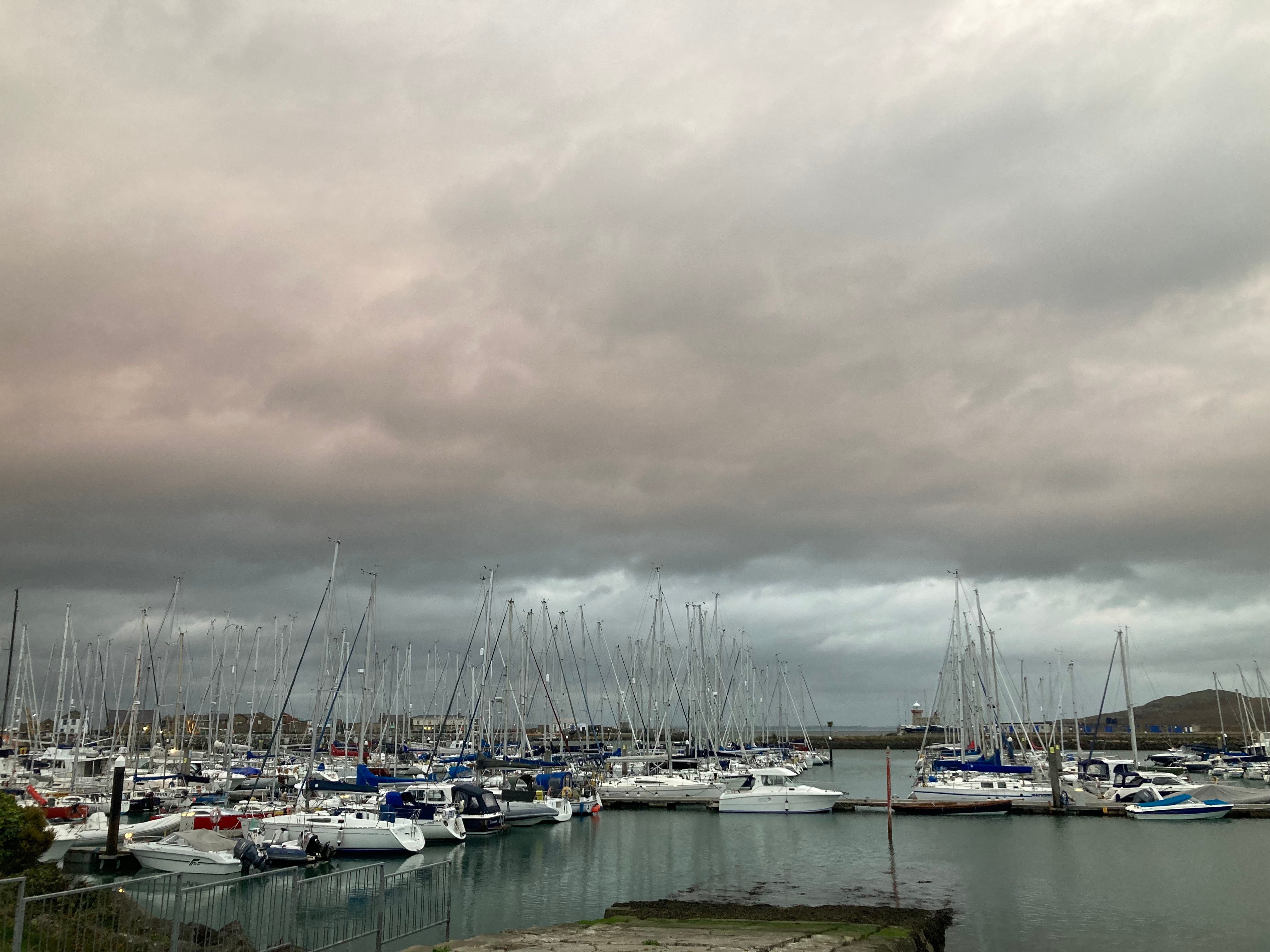
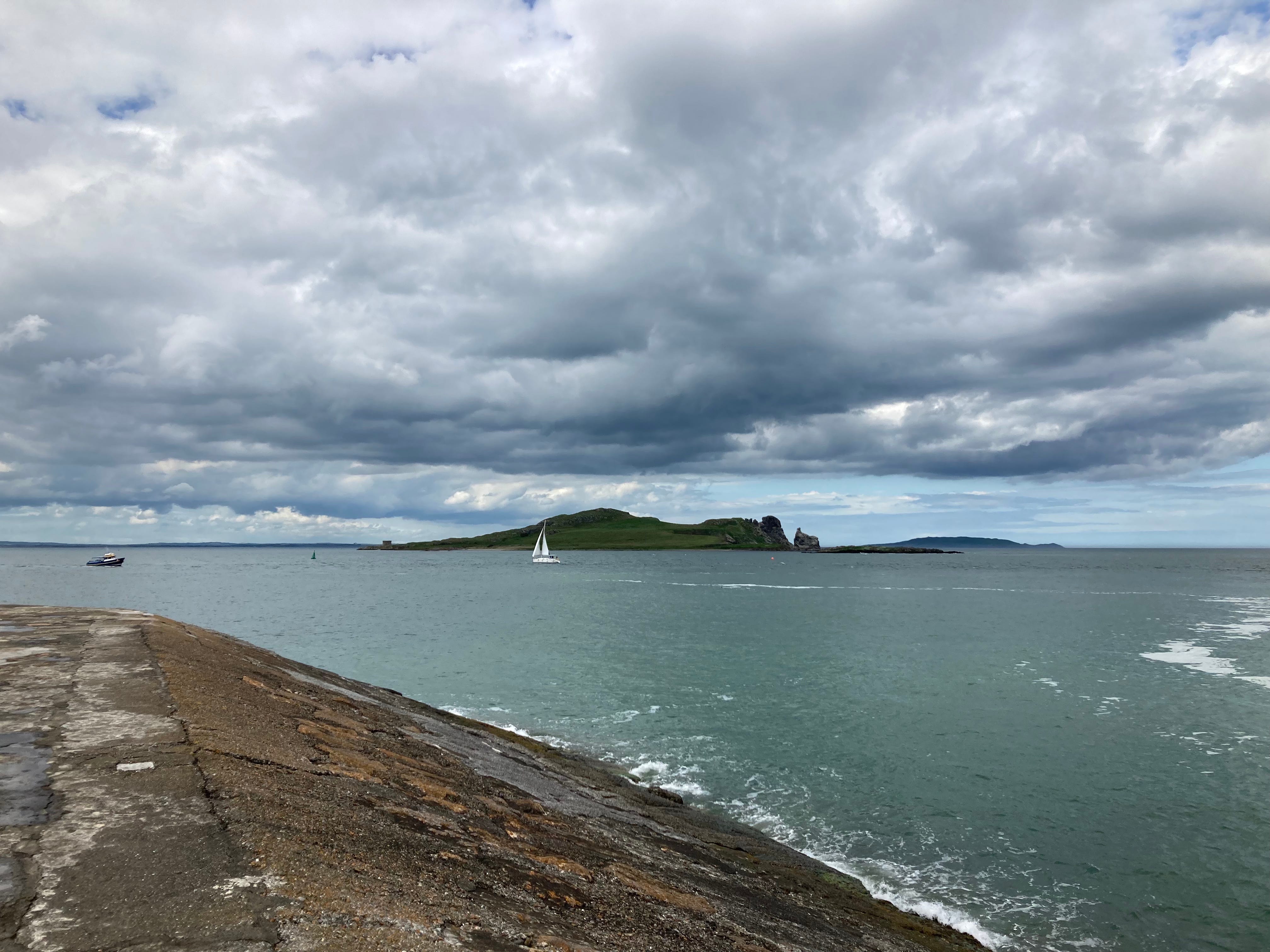
On a cool June evening, as the still-bright sky purpled with rounds of storm clouds, I walked with B to the end of the pier, to the lighthouse, and, without meaning to, called him a fascist.
It was like this: he sympathised with protestors who burned down refugees’ homes. I did not.
He defended the protestors, whose lives were full of pain. He preached about living poor, feeling the state of capital bear down on you, and how it creates a natural rage. I suggested that powerful people, rather than poor people, may have instigated the burning. Was it not, I asked, poor people whose accommodations were burnt?
If you want to burn something, don’t burn people who have less than you. Burn people who take what’s yours and have the wealth to prove it. Burn the parliament. Burn the bank. Burn the corporation making weapons whose sale is the reason for the war that upended the lives of refugees. Take some responsibility. Anyone who associates with people who blame their problems on powerless outsiders and burn their homes is a fucking fascist.
He asked, am I a fucking fascist?
I said, you will be if you go to that protest.
This is an old story, not a product of a ‘newly migrant’ world. Dominant groups blame outsiders for their problems, and, sometimes, the outsiders get burned.
It has happened, also, to women.
Three quarters of the way down the pier, a mist of rain descended. We both pulled up our hoods and shoved our hands into our pockets. B and I have a history. We both loved the same person—loved him like sea loves the mist that lies upon and melts into it, raising its tide—and lost him. Out of respect for this love and loss, we felt bound to reach an agreement.
We agreed, on this occasion, that the EU was to blame.
Then he began to talk about women.
All the women now, he said, the ones in charge. There’s a woman in charge of the EU, a woman bearing down. They’re just the same, same as men. They are, she is, corrupt as men, cruel as men, hard as men, devious as men, warlike as men, hypocritical as men, as greedy and dishonest as the men in charge.
He spoke as though disproving the entire project of women’s liberation. As in: you got what you wanted, and see, it was always a chimera.
I couldn’t think how to address his misapprehension. Was this mens’ opinion? That we wanted to be considered morally superior, rather than simply considered? They mustn’t have any clue how things really stand—the depersonalisation of women in every walk of life—if they think superiority is a possibility within our grasp.
We stood on the pier edge, gazing west. The sky to our left began to turn. Purple clouds transformed, invaded from the centre by rich gold, wounds above hills healing fast, southern rain sucked back into itself. And yet, the whole of the sea to our right stayed wild, stirred by a blackening horizon which poured out winds at every angle. Our boots shuffled wetly on the uneven stone.
Maggie Thatcher, I said finally. You’re aware—I stopped and turned and looked into his expectant blue eyes, old-time English socialist’s eyes, dulled by decades of pissing rain and sexless marriage, betrayed by the habit of deep unlistening—we know some of us are like Maggie Thatcher. Just like you know some of you are like Dick Cheney. That’s life. That’s just people. We’re all people and we want life. You know? Not to be seen as good. To be seen as human. We’ve always been trying to get this one thing. Sometimes we give up and go it alone. You might clock it as an attitude of superiority, but it’s only lonesomeness.
One side of my foot felt wet. I stamped it. Was there a fault in the waterproofing, or a break in the sole? Standing together, B and I were each alone. I was so struck by this fact, and the further fact that everything we’d just said was pointless in the absence of the person we had both loved—the person whose opinion, as it happens, we both sought—that I laughed. The fighting winds upon the water whined and whispered to me about the death of companionship. They said, no matter what, you’re always alone. Women, men, always alone, alone (especially) together.
II
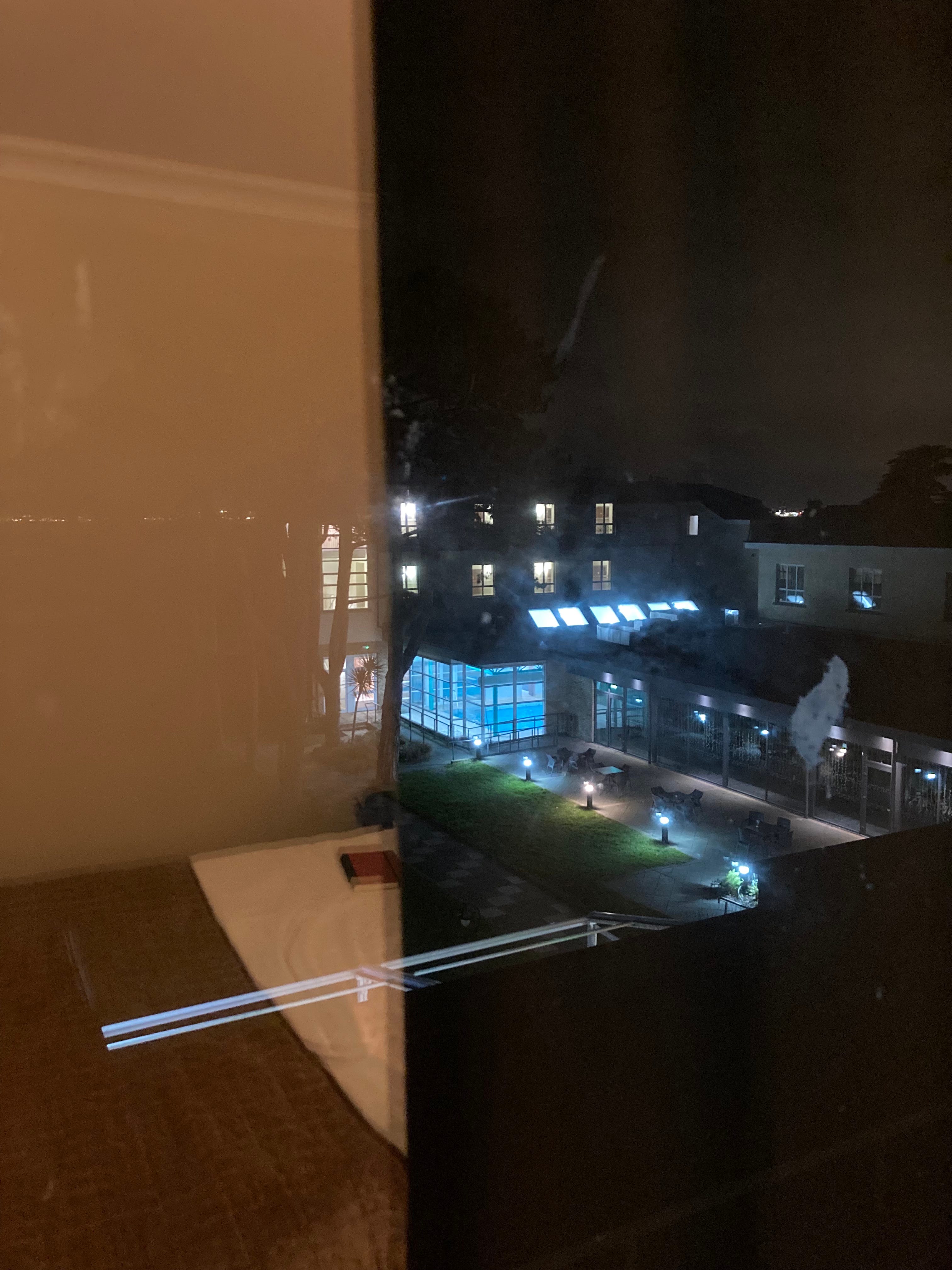
I’ve never given a fuck about being a woman, I thought, as I rested in the basement sauna of a local seaside hotel. The sauna was the only clean part of a rust-shaded leisure centre whose passages, in their Soviet angularity, reeked of fresh coriander and sticky swamp. It was the only place I’d been able to think properly in days.
And I did think, despite the big sweaty man inside, a stranger, lying all the way down, sighing and slapping his wet belly. His vibe, too, was quite Soviet. I didn’t feel threatened, only irritated by the noise. I closed my eyes and tried to contemplate. Wet slap. Meditate. Wet slap. Massage my neck and breathe. Wet slap. Vagus nerve. Wet slap.
What the fuck is the story with this guy? My inner monologue became heated. Do men think they can do whatever they want, wherever, whenever, with no consideration? Yes. Might a woman make annoying sounds in a space that’s meant to be peaceful? Yes. Would a man do it more readily? Probably. Is this important? No. Do I give a fuck? No. Does it help me to get pissed off at a man for slapping his big belly in a public bath? No. Would it help me to learn to accept other people’s noises? Yes.
I once read a Buddhist story about young monks trying to meditate. Across the way from their monastery was a party house, constantly noisy late into the night. The young monks went to the main monk and said, you’ve got to do something about the party house. The noise is interrupting our meditation. He said, maybe your meditation is interrupting the noise.
Regardless of the aggressively-tanned belly-slapper’s gender, blaming him for disturbing my peace was unhelpful. At some point, we must go it alone, ignoring others’ unchangeable faults.
I’ve never wanted to give a fuck about being a woman. But things are always occurring which require me to care. (Not like the belly slapper, I mean for real—put-downs, followings, bad scares, assault, abuse, murder, shame, mutilation, humiliation, judgment, refusal of proper medical care, well, it goes on, and I’m boring myself with the endless list—and that’s the thing about misogyny, it does bore you to talk about it, it’s annoying to have to mention it, again and again and again, it’s a waste of our time to discuss it, in fact, but they just never seem to quite absorb the point and just will not stop fucking with us, you know?)
In my heart, gender is empty space. At best, it’s as meaningful as a chocolate bar, a pair of jeans, a dish of curry—looks pretty, tastes good, fits well, might make me feel better on a lonely night.
But I’d happily forget about gender and instead consider: the way layers of variegated blue overlap a rocky coast, or the way a palm of hand feels against my own warm calf, or how all proteins vital to earthly life were recently discovered on an asteroid, or how some animals live so deep in the sea they eat the heat which gushes from our planet’s centre, or indeed how ninety-five percent of the ocean remains unexplored because it’s so deep you’d kill the life down there simply by shining a torch.
Everything in this world—even this tiny world, ours, the one we’re eating up and spitting out and boiling to death for our sins—is actually so irreducibly strange and multifarious, it makes me cry.
In the sauna, among the beads of sweat on my face (the sauna was, to the hotel’s credit, very hot indeed) were also tears, just a few but true tears, to honour the vastness of our world, the magnificence of its variety, and its danger. (Yes, I was on my period, go on, blame the blood if you like, it’s used to blame.)
I wondered: should I be in the sauna on my period? Am I violating some prohibition? Ridiculous. A holdover thought from the old times, an echo of banishment.
And when confronted with tearful, religious amazement at life’s bursting complexity, was I then supposed to spend time, even a few minutes of my limited time alive in the world, thinking ah yes I am one of two genders, which one is it and what will I do about it, oh do let me consider? How absurd. I had to laugh, and I did laugh a little, quietly and self-consciously, from my woman’s corner of the sauna.
In the hotel baths, in the sauna with a weird man, menstruating securely into cotton, surrounded by locker rooms with little plastic gender dolls pasted on the front, I laughed at the idea that gender could, in the face of the mind-blowing, brain-melting, heart-crushing sanctity of endlessly diverse life, be either binary or important.
III
Walking back with B from the lighthouse, nightsun to our right, stretching its last, and a nautical storm in motion to our left, I said, to say something neutral, mad how the weather can be two things at once.
More than two, he said jovially, and pointed ahead. Before us a radiant circle, the size of the whole seeable sky, made of star-white stripes of light like a ring of Saturn, pulsed and radiated. What’s that, I asked. I don’t know, he said. Some kind of … astronomical phenomenon.
We both felt, quietly and unmistakably, two things: there is no question of superiority among humans, for we are all as ants before the majesty of this third unstoppable thing, this unlooked-for outer-space weather event, this phenomenon and maybe it’s a sign from himself, our one, who’s dead, dead like we will, one day, be.
Women just want to die human, I said after awhile, speaking not to B but directly into the heart of the astronomical phenomenon. Being a woman isn’t really real. The only really real thing is being dead or being not yet dead. No one is anything special. No one is anything. Fascist protestors aren’t special, and neither are women leaders, and neither are we.
J was special, he said, peacefully and with affection. That ring in the sky is special.
True. I smiled as the ring began to fade. When I say no one’s special, I mean—actually no, I was wrong. I don’t know what I’m saying. It is. He was. He really was.
IV
Feminism needs gender-fucking in order to flourish, I thought, as the belly-slapper hoisted himself up and prepared to exit the sauna. Finally. He didn’t look at me, though I was surely staring. He prepared his body meticulously for lift-off—straightened and popped his waistband, brushed the sweat from his breast. Yes, gender-fucking is the key. He stood. His chest and belly and arms were quite hairless. Did he shave? The rounded shoulders were hairy, but the chest—was it stubbly? Naturally smooth? Huh. There was something feminine about his skin. Lubricated, silken. Maybe that’s why he slapped it; he enjoyed his own skin. Or he enjoyed the poignancy of the sound, with no hair to interfere.
He walked out, never once looking me in the eyes.
Gender-fucking raises feminism to a universal level and holds it there.
Every woman I’ve known would like to be judged (if necessary) according to the same standard as men, or as anyone. We would like to participate in forming the social and legal standards by which people are (if necessary) judged. We would like, as presumably everyone would, to be considered according to our specificity. According to our individual lives, contexts, limitations, needs. That is what it means to be considered a person. It’s the basis for liberal individualism, humanism, existentialism, republicanism, much spiritual practice. Each according to their need. The telos of socialism, of anarchy.
Whatever may be your views (radical/not radical) or hopes for the future, they should begin with consideration of the individual qua individual: respect for each person’s complexity and specificity. This is (if you want to get spiritual about it) even a holy complexity. A person’s holiness, or sacredness, or sanctity, is defined by their uniqueness, their unlikeness, their mystery. Even the American constitution, all bullshit aside (and there’s a lot of bullshit), recognises this, as it is supposedly enshrined in the democratic project.
The essence of gender-fucking, which begins by fetishising gender but ends by exploding it and leaving it behind, is the exposition of our significance as irreplaceable individuals who contain bottomless mystery and depth. We are, each of us, a mostly unexplored and inexplicable sea.
Each holy sea of a person lives and dies in a gorgeous/cruel world built on inherent contradictions. Everything here is temporary, though it feels eternal. That is the contradiction that makes us all so fragile and heated and human. And when we die, which we will, we want to die human. Not as genders, or failures of genders, or anything else other than individual thinking animals who, suffering over the contradictions of life, are sacred by virtue of our fragility.
We want to be respected for our personal significance, and respect others on this basis in return. We want to evaluate and be evaluated based on the interplay of pain and our response to pain. That is, on the basis of moral action.
We don’t want to be locked up. We don’t want to be worshiped, or superior, or inferior, or kept, or rejected. We want to see and be seen. Freedom is freedom to marvel at what strikes us, not argue constantly about how to get our due. We do not want to give a fuck about what is due. We do not want anyone to have to think about what is due. We want (and actually cannot believe we haven’t reached this point yet, it’s quite pathetic) to be far beyond questions about dues, as a species.
Imagine a whole life of seeing and being seen as a person, all the time. That is our only real goal—for everyone, the goal—and it is so far from being realised that we must almost despair.
Almost.
My period was, perhaps, causing me to overheat in the sauna after all. I felt faint and shifted my cramping body. I felt the burn of boards on my bare shoulders. I felt heat on my soles of feet and recalled the pier, standing by the lighthouse with B, the sole of my boot cracking to admit the rainwater. I pictured the rough sea and imagined slipping in, gliding all the way down, seeking lightless creatures who feed on hydrothermal vents. Was the hotel sauna, with its cleanliness and angular Soviet design, actually a spew of marine lava, keeping me alive in my darkness, my complex perplexity?
What if I was a deep-down shark or a colourless crab who had never encountered a person? What would I see when I met one, finally, for the first time? Woman or man? No. Nothing but food, maybe, or fear, probably, and increasing wonder, more strangeness, marvel after marvel of unknown depth.
Oh to write creative non-fiction the way you weave your real life scenarios in a poetic and very introspective and thought provoking way, it's like your pattern recognition and connecting-the-dots is always on a league of your own 🙏✨
Excellent!